


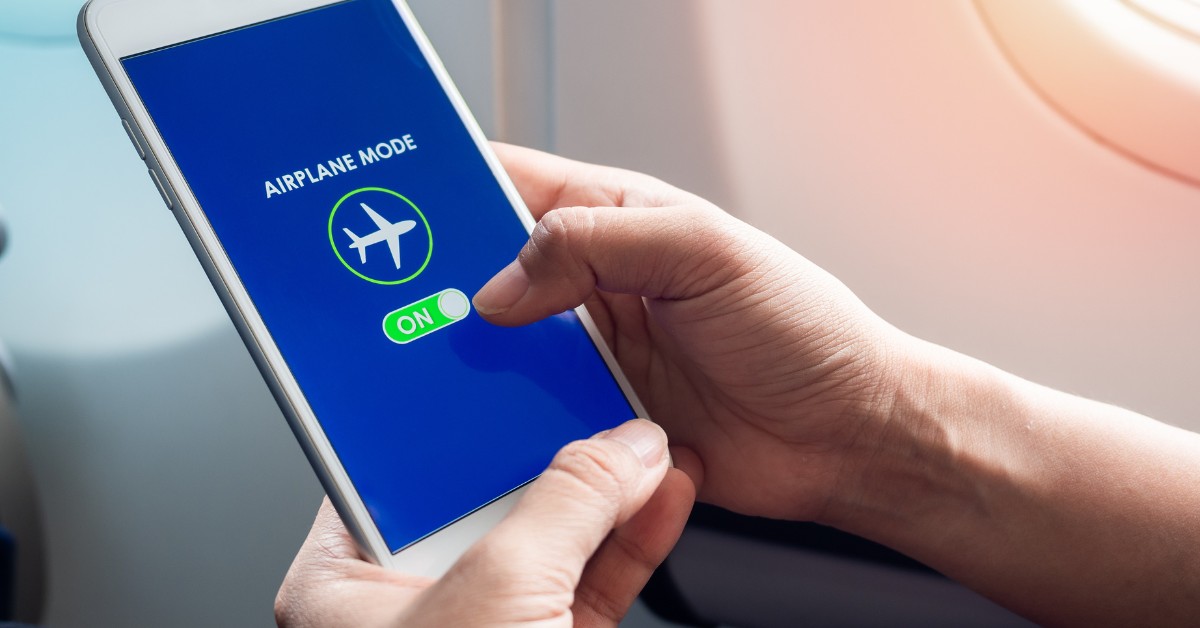
A flight attendant asks you to switch your phone to airplane mode, and suddenly your mind starts racing. What happens if someone forgets? Can a phone really interfere with the plane? For many nervous flyers, this small request can trigger a flood of fear. Understanding why we have to put phones on airplane mode can help replace that fear with confidence. The truth is simpler—and much less scary—than you might think.
Let’s break it down.
What Airplane Mode Really Does
When you activate airplane mode, your phone stops sending out strong radio signals. That means no voice calls, no data, and no Wi-Fi (unless the airline offers its own network). Essentially, it’s like putting your device on silent mode for the airwaves.
This keeps your phone from constantly searching for a signal. Planes move quickly through different cell towers, and your phone tries to keep up with signal changes—firing off small bursts of radio frequency while doing so. That’s what airplane mode shuts down.
Common Myth: Your Phone Can Bring Down a Plane
Let’s ease this fear right now: your phone cannot bring down a commercial airplane. That scenario belongs to movies, not reality. Planes are built with layers of protection, and all critical communication systems are shielded and tested thoroughly.
The real reason for the rule isn’t catastrophic failure—it’s about avoiding potential minor interference with communication frequencies, especially during takeoff and landing when pilot focus is critical.
Think of it like someone whispering in a crowded room. The whisper might not ruin the meeting, but it could be distracting at the worst moment. Keeping thousands of devices in airplane mode simply clears the airwaves for the pilots.
From the Flight Deck: What Pilots Think
Pilots rely on radio communication with air traffic control throughout the flight, particularly during approach and departure. Any background noise on those channels—even a low-level hum—can be a nuisance.
Here’s the key insight: pilots don’t fear phones. But they appreciate when passengers help create the quietest, cleanest frequency environment possible. It’s a professional courtesy and a safety buffer, not a life-or-death line.
- ‘Airplane mode is about prevention, not panic.’
- ‘Flying is full of simple, smart procedures that add up to serious safety.’
- ‘It’s the sum of little things—not one phone—that keeps planes operating smoothly.’
Passenger Reassurance: What This Means for You
If flipping a switch on your phone triggers worry, know this: you’re not alone. Rules without clear explanations can feel unsettling. But now you know that why we have to put phones on airplane mode is not about danger—it’s about discipline, precaution, and respect for the communication environment.
Think of it like traffic rules at an empty intersection late at night. Maybe no one’s around. The rule still applies. It keeps systems flowing smoothly and leaves no room for disorder. The same idea holds true in the sky.
And good news: phones in airplane mode still let you take photos, listen to music, read downloaded books, and even use Wi-Fi (if available). You’re not cut off—you’re just keeping your device in flight-friendly mode.
Understanding the purpose behind the rule makes it feel less like a restriction and more like a ritual of safe, smart travel. The next time you’re asked to switch, feel empowered—not anxious.
Knowledge is your co-pilot. You’ve got this!
Fearless Flight Club
