


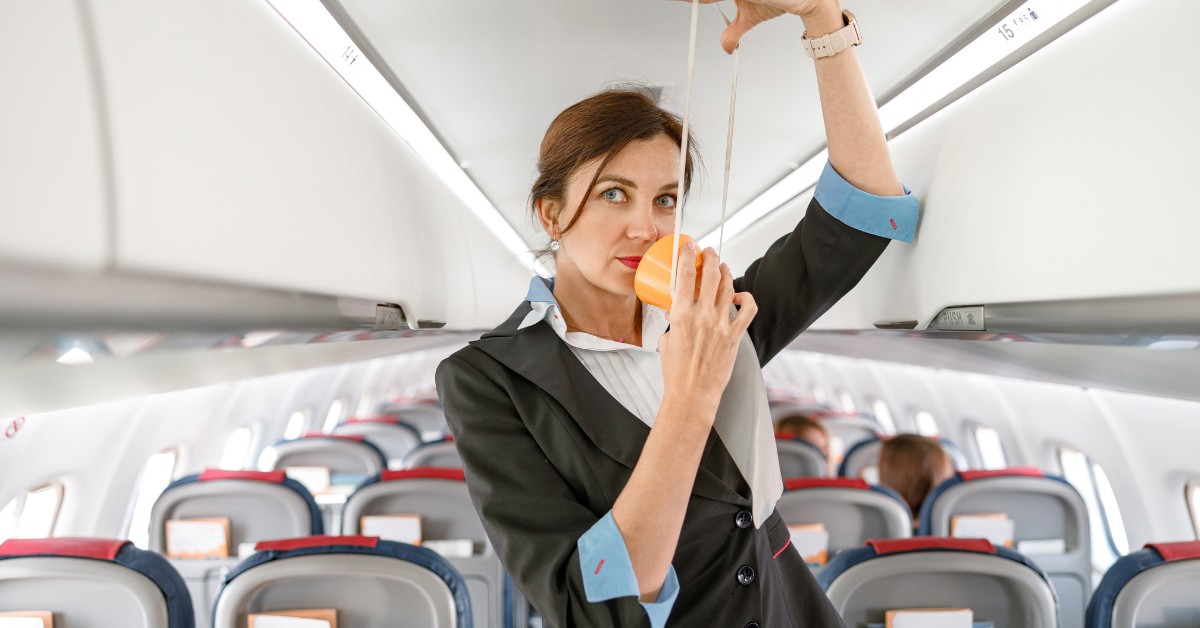
A sudden drop of oxygen masks from the overhead panel can trigger panic—but it shouldn’t. When oxygen masks drop during flights, it’s because a highly reliable safety system has detected a change in cabin pressure and is doing exactly what it’s designed to do: protect you. While it may feel alarming, mask deployment is an automatic, precautionary step built to keep everyone safe. And while many fearful flyers worry about what it means, the truth is much calmer than it seems.
So, what does that really mean?
What Triggers Oxygen Masks to Drop?
Modern commercial aircraft are pressurized to simulate a comfortable environment for breathing—usually equivalent to standing on a mountain about 6,000–8,000 feet high. If for any reason the cabin pressure drops below safe levels, oxygen masks automatically deploy to ensure everyone receives enough oxygen.
This is typically caused by a pressurization system issue or a rare but controlled decompression event. Sometimes it’s a technical malfunction that the aircraft systems detect and respond to faster than human reaction. The key detail: deployment does not always mean something dangerous is happening—it means the aircraft is playing it safe.
Think of the system like an airbag in your car. You may never need it, but if something unusual happens, it activates instantly to protect you.
Common Misconceptions About Mask Deployment
One of the biggest myths is that if the masks drop, you’re in immediate life-threatening danger. That’s not true. The masks are a proactive safety response, not an emergency signal in and of themselves.
Another misconception is that planes are falling out of the sky when this happens. In reality, pilots are trained to descend the aircraft to a safer altitude—below 10,000 feet—where natural breathing is possible. This is standard operating procedure and doesn’t signify a crash or malfunction beyond the pressurization change.
Oxygen mask drops are rare, not random. They’re a response, not a red alert.
From the Flight Deck: Pilots and Oxygen System Training
Pilots are extensively trained for pressurization scenarios during every simulator cycle. They rehearse exactly what steps to take if the cabin pressure changes. Within seconds, they begin a controlled descent to a breathable altitude, communicate with air traffic control, and activate backup oxygen systems if needed.
It’s not just a drill. It’s a practiced, rehearsed plan built around safety. Pilots know how intimidating the mask drop can look to passengers—but for them, it’s a cue in a checklist, not a crisis.
To the crew, it’s predictable. To you, it might feel sudden. That gap can be closed with knowledge.
When Masks Drop, Here’s What You Should Know
First: If oxygen masks drop, place yours over your nose and mouth. Pulling the cord activates the oxygen flow. Even if you don’t feel the air flowing, it’s working—air is intentionally cool and odorless.
The oxygen isn’t coming from tanks for each passenger, either. Most planes use chemical oxygen generators above each row that ignite when the mask is pulled. These provide enough oxygen for at least 12–20 minutes—enough time for the plane to descend to a breathable altitude.
This isn’t about staying airborne for hours. It’s about bridging the few minutes until the environment is safe again.
This entire process is carefully engineered. The aircraft senses reduced pressure, deploys masks, and prompts crews to follow a structured plan that has worked safely countless times around the world.
Your Safety Is Always the Priority
It’s normal to feel uneasy when something unexpected happens mid-flight. But knowing why oxygen masks drop gives you back a sense of control. It’s not chaos—it’s the system doing exactly what it was designed to do. And in nearly every case, it’s resolved quickly and safely.
The silence after the drop isn’t danger. It’s well-rehearsed action taking place behind the scenes.
When you understand the engineering, planning, and pilot training behind these events, they shift from terrifying to approachable. Not comfortable yet—and that’s okay—but manageable.
Knowledge is your co-pilot. You’ve got this!
Fearless Flight Club
