


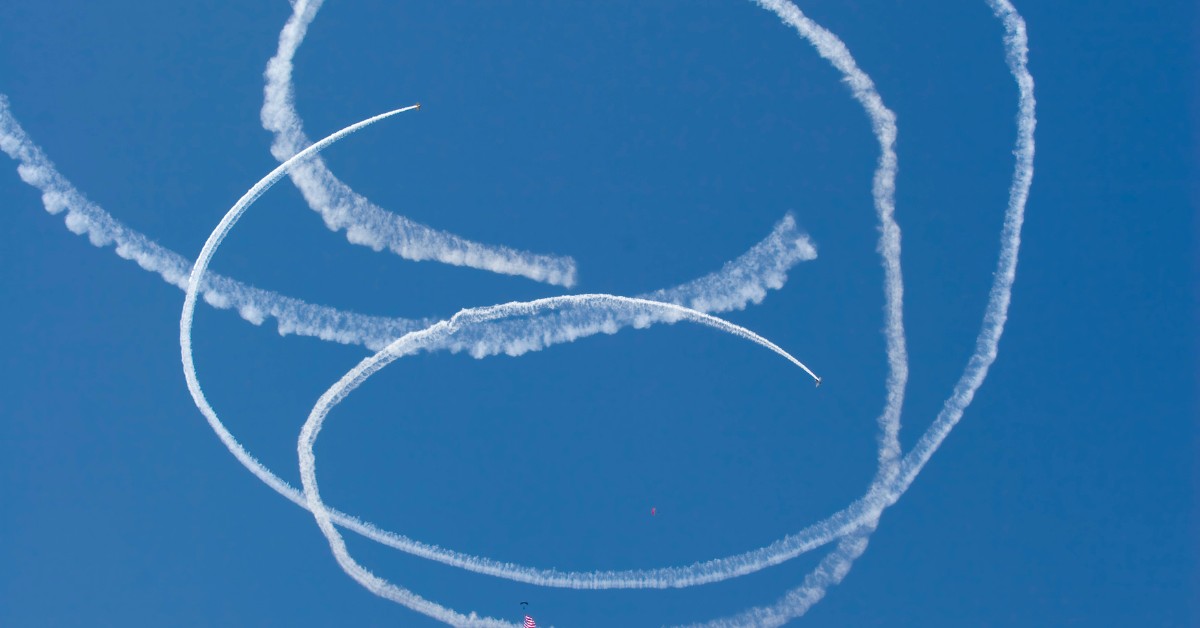
A plane circling before landing can trigger instant worry. Your heart rate jumps. Your mind races: Is something wrong with the plane? Are we in danger? If you’ve asked yourself why do planes circle before landing, you’re not alone — this moment can feel unsettling, especially when you’re not sure what’s behind it.
But here’s the reassuring truth: circling near an airport is a routine and safe part of air traffic control. It’s not an emergency sign. It’s not a pilot improvising. It’s a decision made to enhance safety, not because of a threat to it.
Let’s break it down.
What’s Really Happening When a Plane Circles
The technical term for circling is a ‘holding pattern.’ Think of it like a sky roundabout. When the path to the runway isn’t immediately clear, air traffic control (ATC) guides the flight into a safe loop—usually at a fixed altitude and a defined turn radius—until it’s our turn to land.
Reasons for a holding pattern include:
- Congested runway traffic: There may be a line of planes ahead of you, especially at busy airports during peak hours.
- Weather conditions: Fog, wind shifts, or storms might briefly delay the final approach.
- Runway changes: ATC might switch from one runway to another based on wind direction or operational needs.
Every one of these scenarios is about maintaining order and safety for all aircraft—not because of danger, but to prevent it.
Myth vs. Reality: Circling Isn’t a Sign of Trouble
One of the biggest fears is that circling means the plane has a problem. That’s a myth—but an understandable one. Our minds fill gaps in knowledge with worst-case scenarios. Here’s the fact: pilots do not circle due to mechanical issues. If there were ever a technical concern, the crew would divert to an alternative airport, not stay airborne in a loop.
Circling is proactive safety. It’s how aviation professionals keep each flight exactly where it needs to be until conditions are right to proceed smoothly.
From the Flight Deck: How Pilots Handle Holding Patterns
Pilots train extensively to navigate holding patterns. The procedure is logged, charted, and often pre-briefed for specific airports. When ATC calls for a hold, the pilot follows an established course already built into the aircraft’s navigation systems.
‘Holding is like waiting calmly at a red light. Controlled, deliberate, and entirely within the plan.’
Pilots also stay in constant contact with ATC. They receive updates on timing, weather changes, and landing clearance. Nothing about circling is guesswork. Every detail is managed with precision.
Passenger Perspective: Reframing the Experience
When you’re inside the cabin, circling can feel passive. You don’t see the full picture, and that gap can invite fear. But consider this: just as cars slow at intersections or highways pause due to traffic ahead, planes do the same—at altitude and under tight control.
Your flight is never alone in the sky. ATC choreographs every movement, and holding ensures safe spacing between aircraft. It’s the aviation version of staying in lane until it’s your turn.
Consider this quick mindset shift:
- Circling doesn’t mean uncertainty—it means coordination.
- Delays from the sky are part of an intentional safety net.
- When you’re holding, your crew and ATC are working together with calm professionalism.
Knowledge is your co-pilot. You’ve got this!
Fearless Flight Club
