


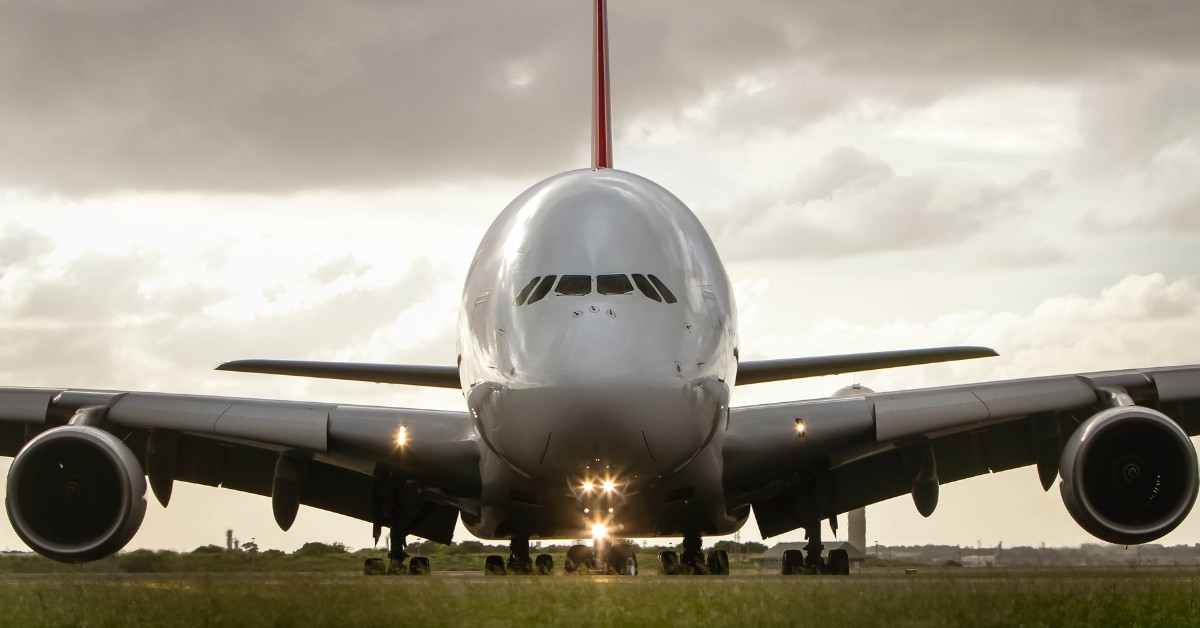
A huge plane like the Airbus A380 can feel impossibly large. It’s common to wonder, how do huge airplanes stay in the air? When you’re feeling nervous, sheer size can trick your brain into thinking something so massive *shouldn’t* be able to lift off. But that instinct, while completely understandable, doesn’t match the science. These aircraft are not only capable of flying—they’re marvels of engineering designed to do exactly that, safely and reliably.
So, what’s really keeping something that weighs over a million pounds in the sky? Let’s break it down.
How Do Huge Airplanes Stay in the Air?
It all comes down to four basic forces of flight: lift, weight, thrust, and drag. The one you’re probably most curious about is lift. That’s the upward force that counters the pull of gravity.
Here’s the simple version: air moves faster over the curved top part of the wing and slower underneath. This creates lower pressure above the wing and higher pressure below it, which pushes the wing—and the entire airplane—up. It’s similar to how a kite catches the breeze and rises. But airplane wings are incredibly engineered to maximize this effect.
And yes—the wings on planes like the A380 are absolutely massive to match their size. They’re not just big for appearances; they’re precision-shaped to generate exactly the right amount of lift for that aircraft’s weight and speed.
Jet Engines: More Than Just Noise
Lift doesn’t work without speed—and that’s where the engines come in. Jet engines on large aircraft don’t just roar and rumble, they create powerful forward thrust. That thrust pushes the plane fast enough for air to start flowing over the wings in exactly the way that produces lift.
Think of it this way: the engines are the push you need to roll down a hill on a bike. Once you’re going, the shape of your bike tires (or in this case, wings) takes over to keep you steady. With airplanes, once they reach the right speed, everything aerodynamic kicks in exactly as intended.
Myth-Busting Moment: Planes Don’t Just ‘Float’
It’s a common misconception that planes are floating or somehow defying gravity through magic or luck. In truth, nothing is left to chance. Every aspect of huge commercial jets is endlessly tested, calculated, and validated by physics.
These planes aren’t just ‘trying’ to fly—they’re built around aerodynamic laws that guarantee they can fly. The A380 wasn’t cleared for the skies until it passed thousands of flight hours in test conditions, simulations, and stress scenarios.
From the Flight Deck: Confidence at the Controls
Pilots who fly large aircraft like the A380 are some of the most experienced in the industry. They’re trained specifically on how that jet handles during takeoff, cruise, and landing. And here’s something reassuring: a lot of pilots LOVE flying big jets. Why? Because they’re stable, powerful, and engineered to react smoothly—even in turbulence or tricky weather.
‘Flying the A380 is like steering a cruise ship through the sky—but with the control of a sports car.’
Passenger Reassurance: It’s Engineering, Not Luck
- Big planes have big lifting power. Their wings are designed to support their weight with room to spare.
- Weight is factored into every part of the flight plan. Nothing is guessed—computer systems calculate exactly how much thrust and lift are needed on every flight.
- Modern jets like the A380 are among the safest ever built. Their size isn’t a liability—it’s a carefully engineered advantage.
Size can feel scary at first. But the next time you board one of these giant aircraft, remember: their ability to fly isn’t just possible—it’s proven, predictable, and profoundly safe. Big planes fly because science says they should. And the science is on your side.
Knowledge is your co-pilot. You’ve got this!
Fearless Flight Club
