


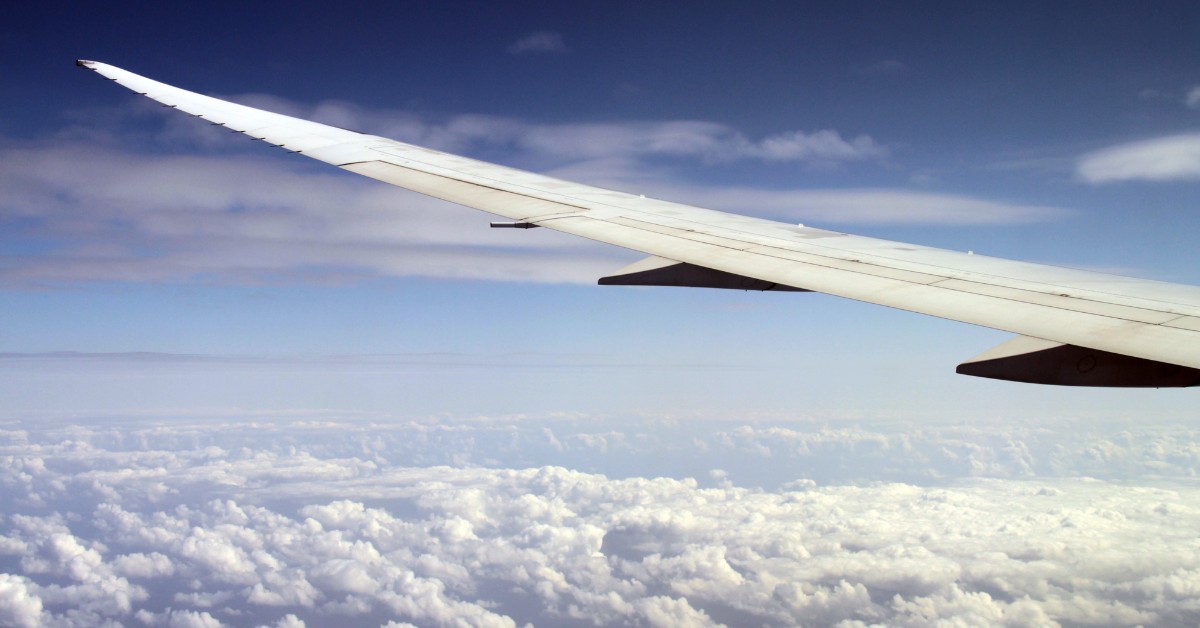
Seeing an airplane wing flex during takeoff or turbulence can be unsettling. The movement looks dramatic, especially when you’re sitting near the wing and watching it rise and fall against the sky. For nervous flyers, it can trigger a sudden thought:
“Surely that can’t be normal?”
But it absolutely is.
If you’ve ever wondered how far airplane wings can bend, the answer is: far more than most passengers realise — and that flexibility is one of the reasons modern air travel is so safe.
In fact, a wing that didn’t bend would be far more concerning.
Airplane Wings Are Designed to Flex
Aircraft wings are not rigid slabs of metal. They’re carefully engineered structures designed to move and adapt under pressure.
During flight, wings constantly deal with enormous forces:
- Lift pulling upward
- Gravity pulling downward
- Changes in air pressure
- Turbulence and gusts
- Fuel weight inside the wings
- Stress during takeoff and landing
If wings were completely stiff, those forces would transfer directly into the aircraft’s body, increasing structural strain and making the ride rougher and less safe.
Instead, wings are intentionally designed to flex and absorb energy — much like suspension in a car.
Think about a tall palm tree during strong winds. It bends and sways to survive. A rigid tree is far more likely to snap. Airplane wings work on the same principle.
Flexibility is not weakness. It’s controlled strength.
So, How Far Can Airplane Wings Bend?
The answer is: a lot.
During normal commercial flights, it’s common for wings to flex several feet up and down. In turbulence, you may notice the tips bouncing or gently rippling through the air. That movement can look alarming from the cabin window, but it’s well within normal operating limits.
What most passengers never see are the extreme stress tests aircraft undergo before they are ever approved to carry passengers.
One of the most famous examples involved the Boeing 787 Dreamliner. During testing, engineers bent the aircraft’s wings upward by approximately 25 feet — around 150% of the maximum load expected in real-world conditions — before structural failure occurred.
That means the wing endured stresses far beyond anything it would encounter in ordinary turbulence.
The takeaway is important:
The movement you see during flight is nowhere near the wing’s actual limit.
Why Flexible Wings Are Safer
At first glance, movement can feel dangerous. Humans naturally associate wobbling or bending with instability.
But in aviation engineering, the opposite is often true.
Flexible wings help:
- Absorb turbulence smoothly
- Reduce stress on the fuselage
- Prevent structural fatigue over time
- Improve aerodynamic efficiency
- Make the aircraft more stable in changing air conditions
Modern aircraft are built using incredibly strong materials such as:
- Aluminum alloys
- Carbon-fiber composites
- Reinforced structural spars
- Multi-layered internal support systems
These materials allow wings to bend significantly without losing strength.
In other words, the wing isn’t “struggling” during turbulence — it’s responding exactly as it was designed to.
Turbulence Looks Worse Than It Feels
One reason wing flex can appear frightening is perspective.
From your seat, the wingtip may seem to move dramatically against the horizon. But aircraft are enormous machines, and what looks like violent movement is often relatively small compared to the aircraft’s overall size.
Pilots and engineers expect this movement.
In fact, if a wing remained perfectly rigid during turbulence, that would create much greater forces throughout the aircraft structure.
The flexing you see is actually helping dissipate energy safely.
That’s why pilots generally view wing movement as reassuring rather than concerning.
The wings are doing their job.
Aircraft Are Tested Beyond Real-World Limits
Before an aircraft is certified for passenger use, it undergoes years of testing under conditions far more severe than typical commercial flying.
Manufacturers deliberately push aircraft structures to extremes, including:
- Severe turbulence simulations
- Maximum load stress tests
- Repeated fatigue cycles
- Extreme temperature conditions
- Emergency manoeuvre testing
Regulators such as the Federal Aviation Administration and European Union Aviation Safety Agency require aircraft manufacturers to prove that wings can withstand conditions far beyond ordinary operations.
Commercial aviation is built around layers of redundancy and safety margins.
Engineers don’t design wings to just barely survive normal flight conditions. They design them to tolerate scenarios far beyond what passengers are ever likely to experience.
What Pilots Think When Wings Flex
Passengers often interpret wing movement emotionally.
Pilots interpret it technically.
To trained flight crews, wing flex is expected behaviour — a visible sign that the aircraft is absorbing aerodynamic forces properly.
Pilots are trained extensively in aircraft systems, structural limitations, turbulence handling, and flight dynamics. They understand exactly how the aircraft is meant to behave in different conditions.
So when the wings move during turbulence, pilots are not thinking:
“Something is wrong.”
They’re thinking:
“The aircraft is responding normally.”
The Psychology Behind the Fear
Fear of wing flex usually comes from uncertainty rather than actual danger.
When we don’t understand what we’re seeing, the brain tends to assume the worst. A moving wing can look fragile, even though it’s actually demonstrating resilience.
Learning how aircraft are engineered helps reframe that fear.
Instead of seeing instability, you begin to recognise:
- Advanced engineering
- Controlled flexibility
- Structural safety margins
- Thousands of hours of testing
- Decades of aviation experience
That shift in understanding can make a huge difference for anxious flyers.
A Better Way to View Wing Movement
Next time you look out of the window and see the wing bending during flight, try to remember this:
You are not witnessing a wing close to failure.
You are witnessing a wing working exactly as intended.
That movement is evidence of sophisticated engineering, rigorous safety testing, and design built to withstand forces far beyond anything encountered in ordinary commercial travel.
The flexing wing is not a warning sign.
It’s one of the reasons modern aircraft are able to fly so safely in the first place.
Knowledge is your co-pilot. You’ve got this!
Fearless Flight Club
