


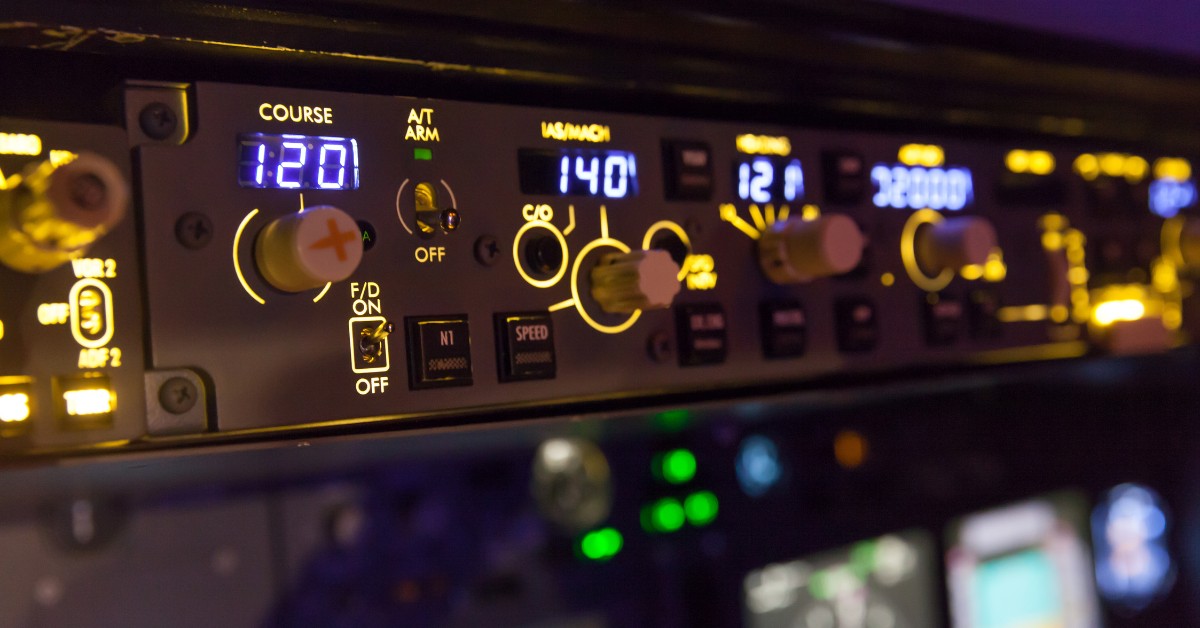
An autopilot failure can sound terrifying. You might imagine a sudden loss of control, alarms blaring, and the flight spiraling into chaos. But in reality, that’s not how it works. Autopilot systems are important tools—but they are not essential to keeping the plane safely in the air. Pilots are not only prepared for this scenario—they train for it repeatedly. Let’s break it down.
What Is Autopilot, Really?
Autopilot is a highly reliable flight system that assists pilots by managing certain tasks like maintaining altitude, heading, or speed. It reduces workload during long flights but doesn’t replace human control. Even when fully engaged, pilots continually monitor autopilot performance, ready to take over at any moment.
Think of it like cruise control in a car. It’s helpful, but if it fails, you simply drive manually. Pilots handle an autopilot failure the same way—with control, confidence, and training.
What Happens During an Autopilot Failure?
If the autopilot system disengages, either automatically or through pilot input, the aircraft does not become unsafe. Manual flight resumes instantly. There is no loss of control, no immediate danger. The pilots take over just like they did during flight training—and they do it calmly and skillfully.
In fact, many parts of takeoff and landing are done manually. Pilots are completely comfortable flying without automation. That confidence comes from thousands of hours of both real flight and simulator experience, including practicing different kinds of system failures.
Myth-Busting: A Failed Autopilot Doesn’t Mean a Lost Plane
One common misconception is that airplanes rely completely on autopilot once they’re airborne. That’s simply not true. Autopilot is a tool, not a necessity. Every commercial pilot is trained to fly each phase of flight manually, should the need arise—whether due to an autopilot failure or as part of standard operations.
Airplanes are built with layers of backup systems. Even if one part of the autopilot malfunctions, others may remain operative. And if needed, the pilots fly manually—just as they’re trained and ready to do.
From the Flight Deck: How Pilots Handle It
When autopilot disengages, pilots hear a distinct tone and see a notification on their flight display. This doesn’t mean trouble—it simply lets them know they’ll need to resume manual control. And just like that, the pilots fly the plane themselves, just as they did before automation existed.
Here’s something that might surprise you: many pilots enjoy hand-flying the aircraft. It reminds them of their early training and allows them to stay sharp on skills they use regularly.
‘Autopilot is helpful, not essential.’
‘Flying manually is something commercial pilots are trained to do in their sleep.’
‘Autopilot failing isn’t drama—it’s just a switch.’
Passenger Reassurance: Why You Can Relax
It’s okay to feel uneasy when you hear phrases like ‘system failure’—that’s a normal reaction. But in commercial aviation, systems like autopilot are built NOT to cause chaos, but to make flying smoother. And when one disconnects, pilots smoothly take over. There’s no guesswork. No panic. Just a highly trained crew doing what they do best.
And remember, the flight deck is a team. At least two experienced pilots are always on board, working together, backed by multiple safety systems, and supported by air traffic control from the ground. An autopilot failure may sound alarming, but for those in charge of the aircraft, it is an easily handled event.
Knowledge is your co-pilot. You’ve got this!
Fearless Flight Club
