


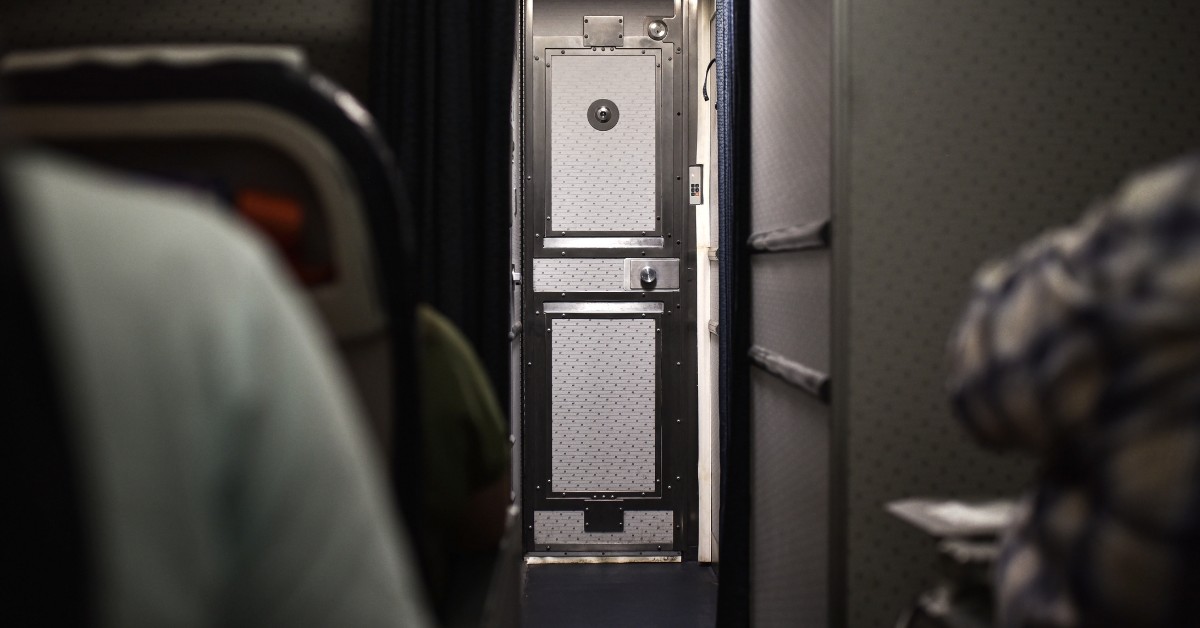
The idea that someone could force their way into the cockpit mid-flight can be deeply unsettling. For many nervous flyers, this fear strikes at the heart of safety and control. When you’re 30,000 feet in the air, it’s natural to wonder just how protected the flight deck really is. This is where cockpit door security comes into focus — and the truth is far more reassuring than the fear.
Let’s break it down.
What Is Cockpit Door Security?
Modern cockpit door security is a highly engineered system designed to prevent any unauthorized access during flight. After the events of 9/11, aviation authorities worldwide radically changed cockpit access protocols. All commercial aircraft are now required to have reinforced, bulletproof cockpit doors that stay locked for the entire flight.
These aren’t just regular doors. They’re made with multiple layers of strong composite materials, designed to withstand both physical force and ballistic impact. The cockpit door is always locked from the inside. Only authorized crew members can control who accesses the flight deck — and they follow strict procedures when doing so.
This system isn’t just good — it’s globally enforced. The Federal Aviation Administration (FAA), European Union Aviation Safety Agency (EASA), and other authorities mandate these cockpit security measures as standard practice.
Myth-Busting Moment: Could Someone Force It Open?
This fear often stems from how movies or TV depict dramatic onboard breaches. But in reality, forcing open a cockpit door mid-flight is virtually impossible.
These doors are not just locked — they’re electronically secured and monitored. There’s a keypad system outside the cockpit that allows emergency access under specific conditions. But even then, the pilots can override any external attempt to open the door.
Here’s the bottom line: No passenger can break into the cockpit during flight. Not with force. Not with stealth. Not by surprise.
From the Flight Deck: How Pilots Maintain Safety
Pilots are trained with cockpit door protocols as part of their core responsibilities. When someone needs access — like a crew member — the procedure includes visual confirmation through cameras and secure communication before unlocking the door. During that brief moment, a flight attendant will stand guard, sometimes with a security trolley, blocking direct access from the cabin.
Flight crews don’t take chances. Every access moment is choreographed and backed by layers of safety.
Pilots have total control of the cockpit entry system.
The cockpit is designed to be a secure, isolated space — even at 35,000 feet.
Passenger Reassurance: Why You’re Safer Than You Think
It’s easy to imagine worst-case scenarios. But knowing how cockpit door security actually works can restore your confidence. This isn’t just about a locked door — it’s about layered defense.
- Reinforced materials resistant to force and damage
- Electronic access controlled solely by the pilots
- Strict international regulations to protect cockpit integrity
- Trained flight attendants and security protocols to manage access attempts
In fact, because of these multi-layered protections, cockpit breaches are statistically nonexistent on commercial flights. These aren’t just rules on paper — they’re practiced every day, on every flight, by professional crews who make safety their mission.
Anxiety often exaggerates risk. But fear shrinks when met with facts.
Knowledge is your co-pilot. You’ve got this!
Fearless Flight Club
