


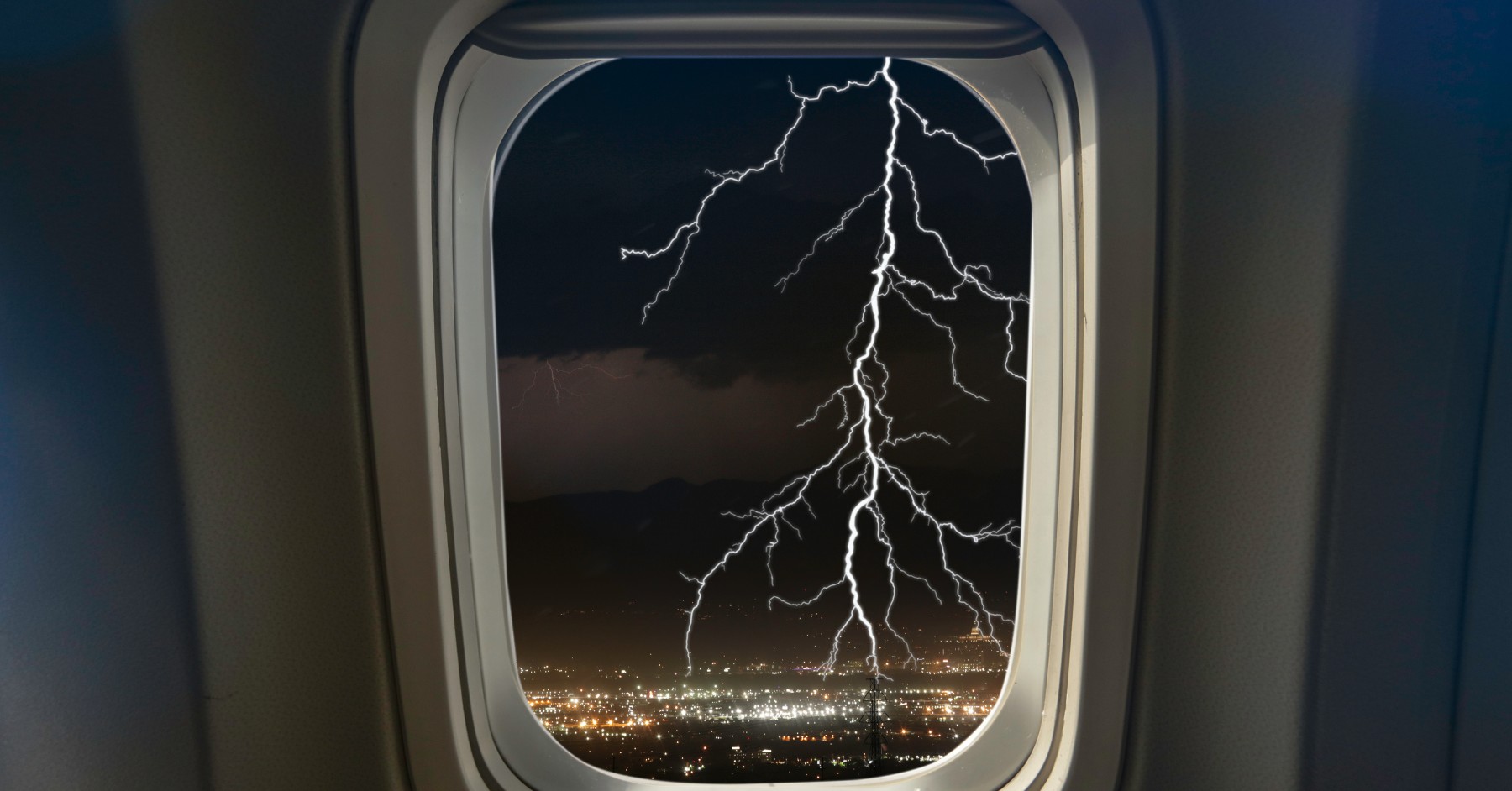
A lightning strike plane scenario can sound terrifying. A flash of blinding light —and you’re 30,000 feet in the air. It’s easy to imagine catastrophe. But here’s the truth: lightning striking a plane is far more common than most people realize, and it’s not the danger it might seem. In fact, it’s a challenge engineers and pilots are highly trained and prepared for.
Let’s get into what really happens when lightning hits an aircraft, and why there’s no need for fear.
Understanding a Lightning Strike on a Plane
Commercial aircraft are hit by lightning roughly once or twice per year, on average. It’s a routine part of flying, not an emergency. When lightning strikes a plane, it most often connects with a wingtip or nose, travels along the surface of the fuselage, and exits through another extremity such as the tail. The electricity stays on the outside of the aircraft—thanks to a principle called the Faraday cage effect.
Planes are designed to conduct electricity around the outer skin, keeping the inside safe. Just like how a car protects you during a storm, an aircraft channels the current harmlessly along its surface, shielding passengers and systems.
Myth-Busting: Planes Don’t Fall from the Sky
One of the biggest misconceptions is that a lightning strike could cause an engine to fail or bring down the plane. That’s not how it works. Aircraft undergo rigorous lightning certification requirements. Designs include lightning diverters, bonding straps, and shielding for electronics. Even sensitive avionics are thoroughly tested to continue working during and after a strike.
The FAA has detailed regulations ensuring aircraft can safely withstand lightning. Since the 1980s, there have been no fatal commercial airline crashes in the U.S. caused by lightning. In other words: It’s dramatic, but not dangerous.
From the Flight Deck: How Pilots Handle It
For pilots, a lightning strike plane event is more of an operational note than a crisis. They stay calm, perform quick system checks, and notify maintenance to inspect the aircraft after landing. Modern cockpit instruments alert crews if any systems need attention, but serious issues are extremely rare.
In many cases, the biggest concern is simply informing passengers that all is well. It can be startling, which is understandable—but for the pilots, it’s not a major cause for concern.
‘Lightning sounds loud, but in the cockpit, we might just log it and move on.’
Why You’re Safe—Even in the Storm
Lightning tends to strike planes when flying near thunderstorms, not inside them. Pilots actively avoid the most intense parts of storms using radar and flight plans. This lowers the chances of turbulence or updrafts, with lightning usually being an incidental spark rather than a hazard.
‘A lightning strike looks dramatic, but your safety isn’t shaken.’
Even if you’re seated during a strike, you’ll likely notice only a flash or a noise—then nothing changes. That’s how well aircraft systems work. In fact, some passengers sleep right through them.
Reframing the Fear With Facts
It’s normal to fear the unexpected. A lightning strike plane moment feels out of your control—but knowing what really happens helps take that fear apart. Planes are built to absorb and redirect lightning without harm. Pilots treat it as routine. No deviation in safety procedures, no panic. Just facts, preparation, and layers of design that protect you.
‘Fear fades when you see behind the curtain of technology and training.’
Knowledge is your co-pilot. You’ve got this!
Fearless Flight Club
