


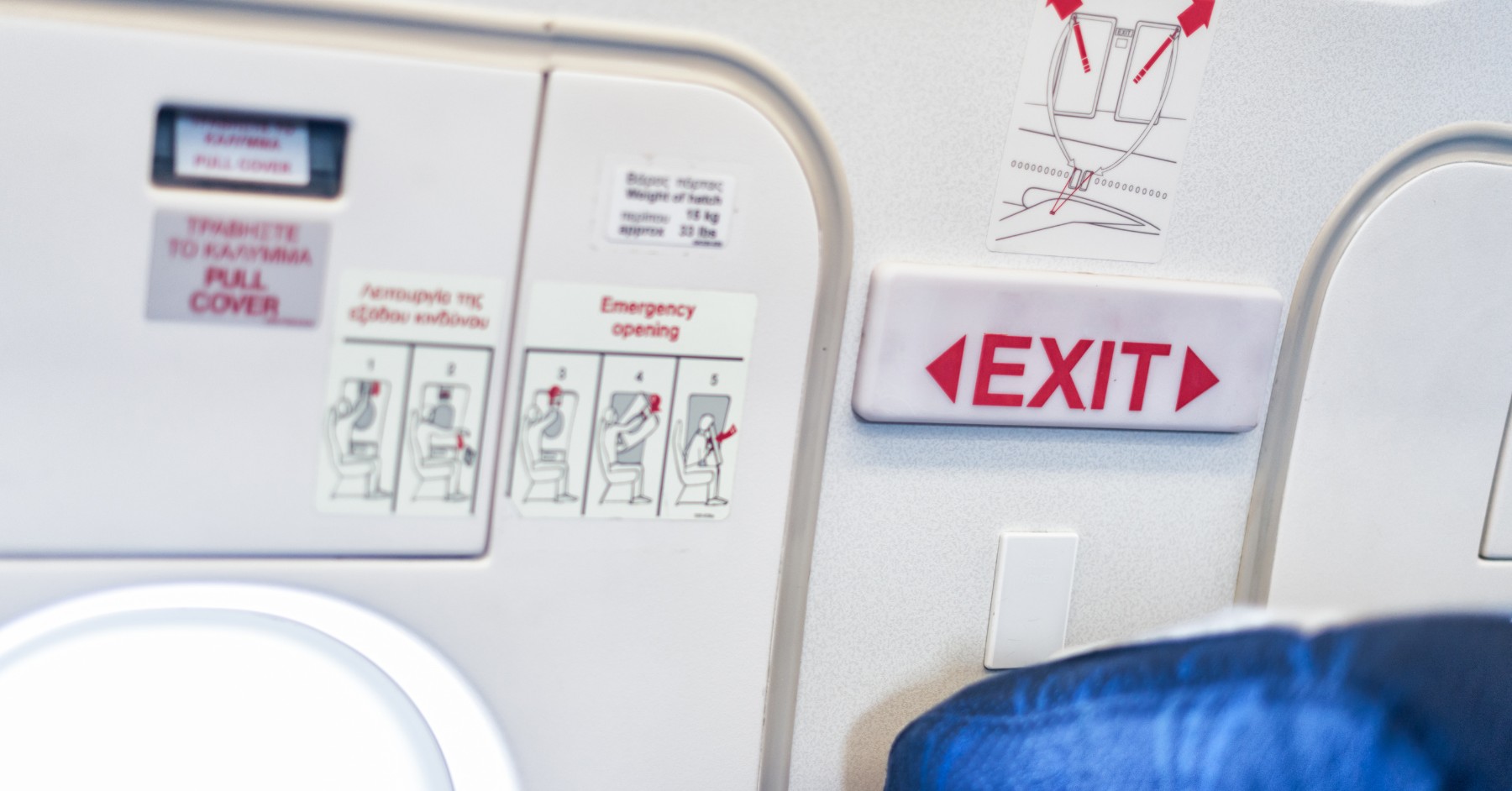
A sudden thought can strike mid-flight: what if someone tries to open an airplane door while we’re in the air? That scenario alone is enough to spike anxiety, especially for nervous flyers. It sounds dramatic—and terrifying—but here’s the simple truth: it can’t happen. Not because it usually doesn’t, but because it’s physically impossible. That fear is valid, but the reality is far more reassuring.
Let’s break it down.
Why You Can’t Open an Airplane Door in Flight
Commercial aircraft are pressurized to keep conditions inside safe for passengers and crew at high altitudes. At cruising height—typically around 35,000 feet—the outside air pressure is much lower than inside the cabin. This means the door is essentially locked in place by the force of pressurization.
To physically open an airplane door while airborne, you’d have to overcome several thousand pounds of pressure pushing against it. Imagine trying to pull open a sealed vacuum container from the inside. Now multiply that resistance exponentially. That’s what a pressurized aircraft door is like in flight. No human strength is enough to budge it.
Myth-Busting Moment: It’s Not Just About a Locked Handle
Many people think if someone tried hard enough or broke safety protocols, they could force an emergency exit or main cabin door open. But doors aren’t just held shut by latches—they’re designed to ‘plug’ into the aircraft. That means they open inward a bit before they swing out. In a pressurized cabin, you can’t even begin that inward movement. So even if someone did grab the handle, it wouldn’t do anything.
One quick fact: no commercial aircraft in history has ever had its door opened mid-flight due to passenger interference. That’s not just luck—it’s design.
From the Flight Deck: How Pilots View This Fear
Pilots hear this worry often—and calmly dismiss it, because they know just how impossible it is. Cabin doors and emergency exits are part of the aircraft systems checked on every flight. And once that aircraft is airborne and pressurized, doors become functionally immobile.
Even cabin crew, with all their training and access, couldn’t open an airplane door mid-flight if they wanted to. The aircraft just won’t allow it. Think of the door as sealed shut with an invisible, unstoppable force—because it is.
Passenger Reassurance: Facts to Calm the Fear
This fear usually isn’t about logic—it’s about imagination running wild in a high-stress environment. But now you know: nothing scary can happen just because a person stands near a door. And if someone does behave unpredictably, flight attendants are trained to intervene calmly and swiftly.
This isn’t a ‘what if’ to fear—it’s a ‘can’t ever’ to let go of. And the more you understand the factory-strong physics behind modern aircraft, the more you reclaim your control over fear.
- Quote this: ‘An airplane door acts like a cork in a pressurized bottle—until the pressure is equalized, it cannot come out.’
- Remember: ‘No amount of force will open that door at cruising altitude.’
- One more: ‘Airplanes are built with barriers stronger than fear.’
Knowledge is your co-pilot. You’ve got this!
Fearless Flight Club
