


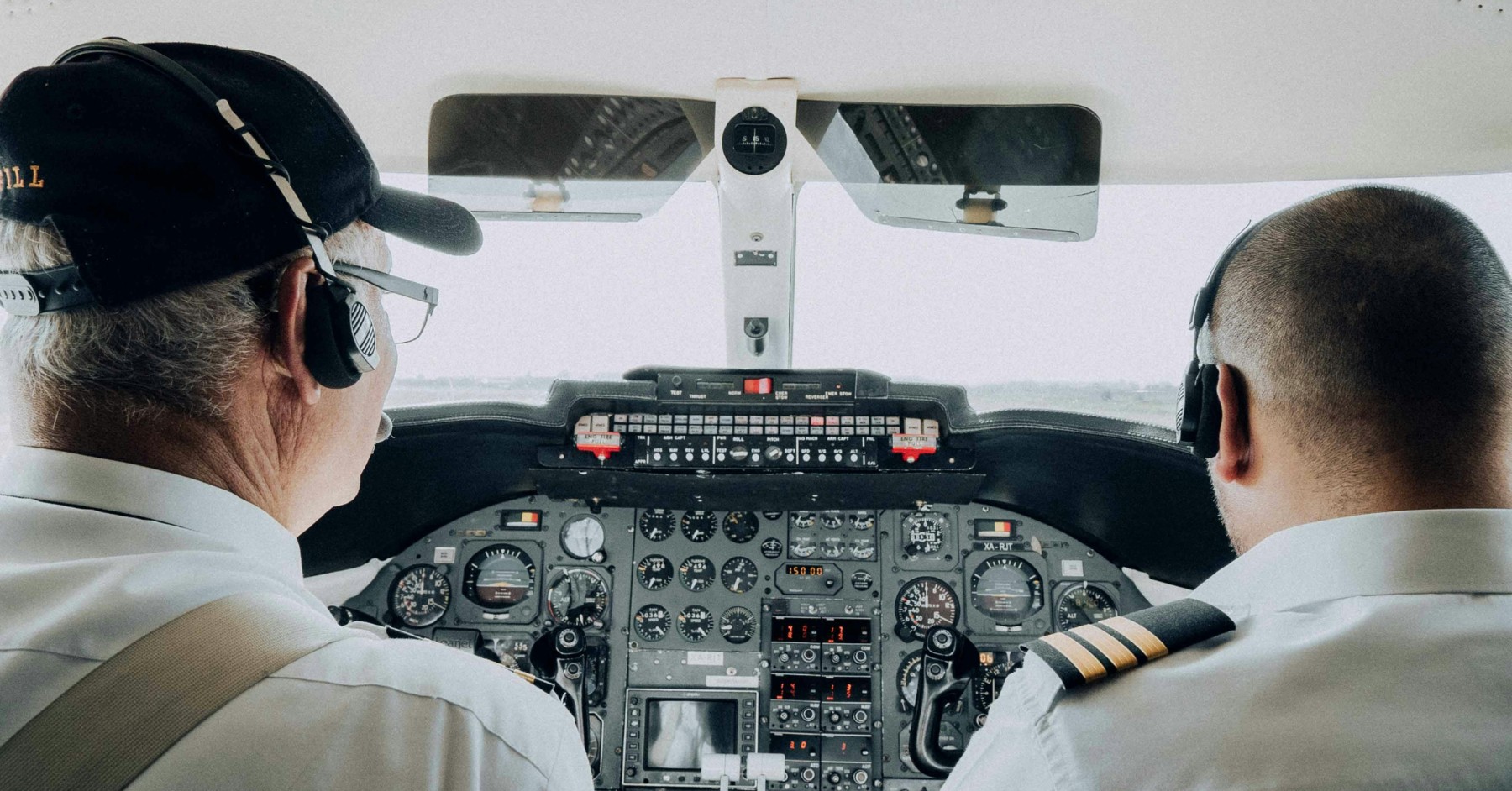
It’s a common fear: what happens if a pilot gets sick? The idea of someone in command feeling incapacitated mid-air feels alarming — and understandably so. But here’s the truth. Commercial aviation is built on robust safety layers, and this exact scenario is not only anticipated but fully prepared for. There are clear protocols, trained professionals, and built-in redundancies to ensure flights remain safe, even when a pilot sick situation arises.
Let’s break it down.
What Happens When a Pilot Gets Sick During a Flight?
If a pilot becomes ill mid-flight, the co-pilot — or more formally, the first officer — seamlessly takes over command of the aircraft. Both pilots are fully licensed and trained to fly the plane independently. They share flying duties from takeoff to landing, so stepping into the lead role is a part of their routine, not an emergency improvisation.
This setup is why there’s always at least two pilots on board for commercial flights. It’s not just company policy — it’s a global aviation safety standard mandated by regulatory authorities like the FAA and EASA.
Myth-Busting Moment: It’s Not All on One Person
A common misconception is that only one pilot knows how to fly the plane. That couldn’t be further from the truth. On most flights, both the captain and the first officer alternate who flies and who operates the radios. They train together. They brief together. They’re a team, not a hierarchy of skill.
In fact, there are rigorous protocols requiring both pilots to be fully alert and capable at all times. And if one shows any sign of illness prior to departure, they’re replaced — no exceptions. Safety always comes first.
From the Flight Deck: What Pilots Do in This Situation
Pilots train extensively for scenarios just like this. If a pilot becomes sick, the other pilot immediately assumes full control. They notify air traffic control, assess the situation, and decide whether a diversion is necessary. If the illness is mild and manageable, the flight will likely continue to its destination without incident. If it’s more serious, the aircraft may land at the nearest suitable airport, supported every step of the way by air traffic control.
To put it in perspective, here’s how pilots think about it: ‘Losing a pilot is like switching drivers on a road trip — it’s already part of the plan.’
How Air Traffic Control Supports the Crew
Air traffic controllers are trained to manage medical diversions. If a pilot sick situation arises, the crew can immediately communicate, request priority handling, and start coordinating for a safe and smooth reroute. Controllers provide weather updates, alternate airport options, and guide the aircraft every mile of the way. You’re never flying alone — there’s an entire safety net on the ground, watching and helping.
Passenger Reassurance: Built-In Safety Layers
Modern aviation is designed around one simple principle: if something goes wrong, there’s a plan — and a backup to that plan. If a pilot feels even slightly off, they can hand control to their co-pilot without hesitation. In rare situations where both are unwell (extremely rare), long-haul flights may include a third pilot.
Plus, flight attendants receive emergency training and can help manage the situation in the cockpit and cabin until landing. If needed, in-flight medical assistance can also be coordinated via radio with ground-based doctors for both pilot and passenger issues.
You might be surprised to learn that this scenario — while rare — has occurred on flights with zero safety issues. Because redundancy is not the backup plan in aviation. It is the plan.
‘Redundancy in aviation isn’t optional — it’s the foundation.’
‘Pilots don’t fly alone. They fly as part of a system built for safety.’
Knowledge is your co-pilot. You’ve got this!
Fearless Flight Club
