


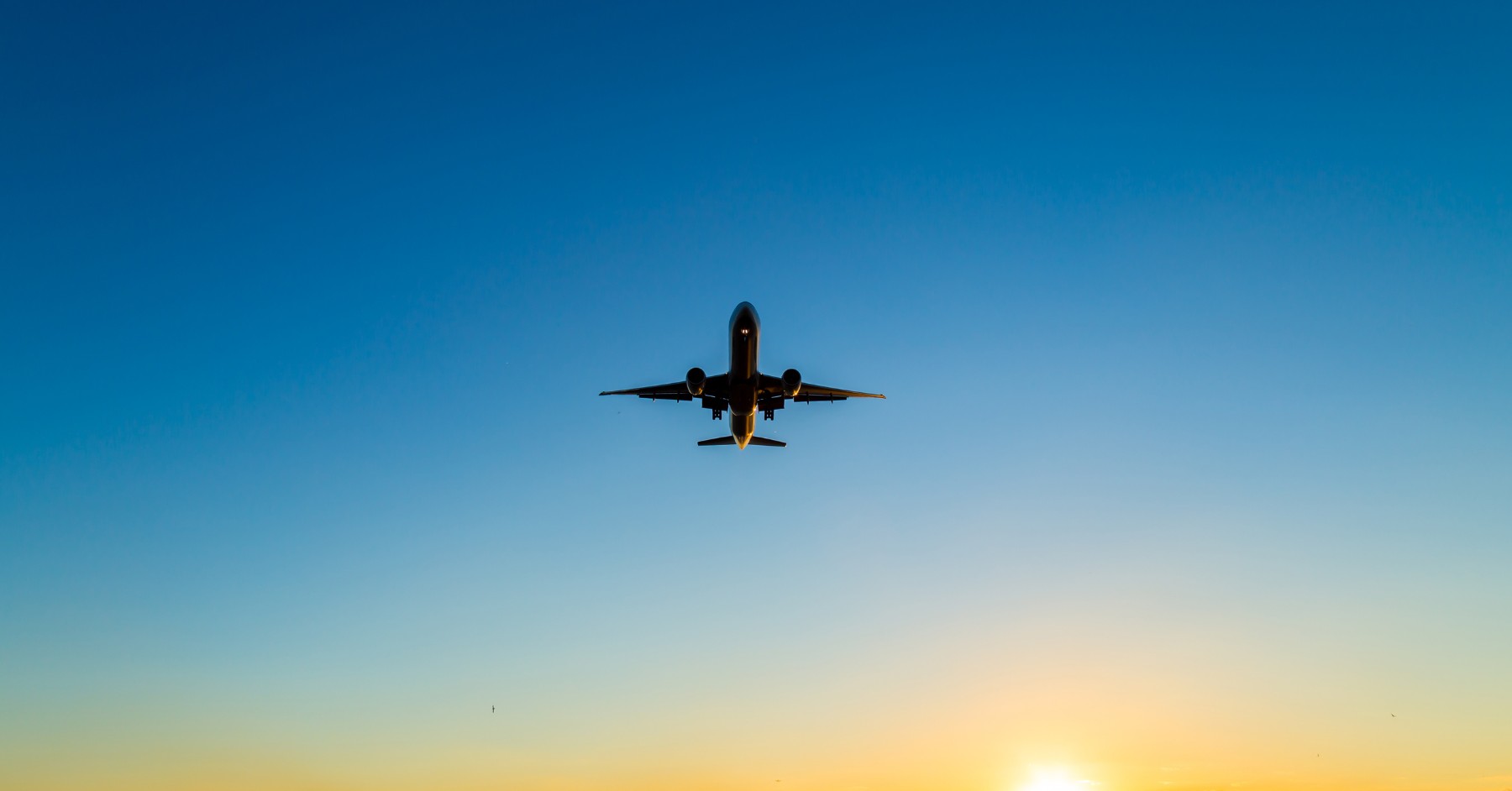
A sudden silence from the engines is close to the top of most nervous flyers’ fear list. So can planes glide without engines?
Yes, and not in some marginal, barely-surviving way. An airliner with zero engine power is still, fundamentally, a very large, very efficient glider. It stays fully controllable, and total power loss is also exceptionally rare to begin with.
Why Aircraft Are Built to Glide
A wing doesn’t need an engine to produce lift, it needs air moving over it. Forward motion does that, whether that motion comes from thrust or simply from gravity pulling a descending aircraft forward.
Think of coasting a bicycle down a hill with your feet off the pedals. You keep moving, and you keep steering, because momentum and gravity are doing the work the pedals normally would. A glide is the same idea, with altitude standing in for the hill.
Every aircraft has a glide ratio: how far it travels forward for every foot it descends. It’s not a rough guess, it’s precisely known and published for every certified aircraft type.
How Far Can a Powerless Airliner Actually Go?
The numbers are more generous than most people expect:
| Aircraft | Approximate glide performance |
|---|---|
| Airbus A320 family | About 2.5 nautical miles per 1,000 ft of altitude |
| Boeing 777 | A glide ratio of roughly 20:1 |
| General rule of thumb, most jets | Around 2 to 3 nautical miles per 1,000 ft |
At a typical cruising altitude near 35,000 feet, that translates to a glide of well over 60-100 miles, more than enough time and distance for a crew to identify an airport, brief the cabin, and set up a controlled approach.
Two Real Examples, Not Hypotheticals
This isn’t theoretical. It’s happened, and it’s gone well.
In January 2009, US Airways Flight 1549 lost thrust in both engines after striking a flock of geese, roughly two minutes after departing LaGuardia. According to the NTSB’s own accident investigation, the crew glided the Airbus A320 to a ditching on the Hudson River, and all 155 people on board survived. Our guides to what happens when a bird hits a plane and whether planes can land safely on water cover the two halves of that story in more depth.
In 1983, Air Canada Flight 143, a Boeing 767, ran out of fuel at 41,000 feet over Canada. The crew glided it almost 75 miles before landing safely at a decommissioned airbase, an incident now nicknamed the “Gimli Glider.” It remains one of the clearest illustrations of just how much a modern jet can do with no power at all, and our piece on what happens if a plane runs out of fuel looks at how fuel planning is designed to prevent it happening again.
What Pilots Actually Do When It Happens
There’s no improvising here. Every airline pilot trains for total power loss in a simulator, and the response follows a set sequence:
- Establish the aircraft’s best glide speed to maximize distance and time.
- Attempt to restart the engines, following a specific checklist.
- Communicate the situation to air traffic control and request priority handling.
- Select and brief a landing site, an airport where possible, based on distance and glide performance.
It’s a controlled, deliberate descent, closer in spirit to a rehearsed maneuver than a crisis. It’s also a different scenario from losing just one engine, which our guide to whether a plane can fly with one engine covers separately, since a single engine still producing thrust changes the picture considerably.
What It Actually Feels Like
Not dramatic. A glide is a smooth, steady descent, not a sudden drop or a violent motion.
From a passenger’s seat, it can feel remarkably close to an ordinary approach to landing. The difference is entirely in what’s happening at the front of the aircraft, where a well-rehearsed plan, not panic, is running the show.
Knowledge is your co-pilot. You’ve got this!
Fearless Flight Club
